
description Patanga succincta Overview
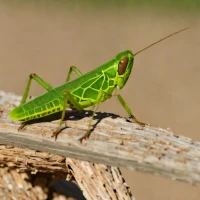
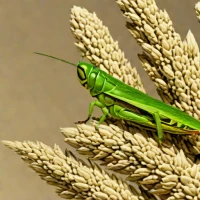
Patanga succincta, commonly known as the Bombay locust, is a species of short-horned grasshopper found throughout South and Southeast Asia. While typically solitary, the species is known for its ability to form massive swarms during periods of rapid population growth, altering its behavior and morphology. These swarms can cause significant agricultural damage by consuming crops such as maize, sugarcane, and millet, as well as feeding on forest vegetation.
help Patanga succincta FAQ
What is Patanga succincta commonly called?
Patanga succincta is commonly called the Bombay locust. It is a short-horned grasshopper found in South and Southeast Asia.
Can the Bombay locust form swarms?
Yes, Patanga succincta is usually solitary but can become gregarious when populations increase. In that phase it may form large swarms capable of damaging crops and grassland vegetation.
Where does Patanga succincta occur?
Its range includes parts of the Indian subcontinent and Southeast Asia. It is associated with grasslands, open country, and agricultural areas within that region.
What is the difference between the solitary and swarm phases of Patanga succincta?
Solitary individuals tend to live and move independently at lower population densities. Under crowded conditions, behavior and coloration can change, and the insects may travel and feed in groups.
explore Explore More


Reviews & Comments
Write a Review
Be the first to review
Share your thoughts with the community and help others make better decisions.


