
description Pingualuit Overview
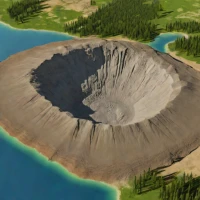
Pingualuit is a small impact crater located in eastern Canada. Formed during the Pleistocene epoch, it represents one of the youngest confirmed impact craters on Earth. Its notable preservation offers scientists valuable insights into early impact events and planetary formation processes. Geologists and researchers studying geological history and extraterrestrial impacts find Pingualuit particularly significant.
help Pingualuit FAQ
Where is the Pingualuit crater located?
Pingualuit is located in the Ungava Peninsula of Nunavik, Quebec, in eastern Canada. It sits entirely within the Pingualuit National Park, which is accessible only by chartered aircraft.
How deep is the water in Pingualuit crater?
The lake inside Pingualuit crater is incredibly deep, plunging to a maximum depth of about 267 meters (876 feet). It is one of the deepest lakes in North America and holds some of the purest fresh water on Earth.
When did the Pingualuit impact event happen?
The meteorite impact that formed Pingualuit occurred roughly 1.4 million years ago during the Pleistocene epoch. It is considered one of the youngest and best-preserved impact craters of its size on the planet.
What does the name Pingualuit mean?
In the local Inuktitut language, "Pingualuit" roughly translates to "where the earth rises" or "pimple." It was formerly known by non-indigenous explorers as the "Chubb Crater" and "New Quebec Crater."
explore Explore More



Reviews & Comments
Write a Review
Be the first to review
Share your thoughts with the community and help others make better decisions.


