
description Six-spot burnet Overview
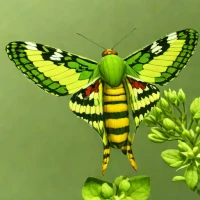
The six-spot burnet (*Zygaena filipendulae*) is a day-flying moth belonging to the family Zygaenidae, widely distributed throughout Europe. It features dark, metallic blue-green or black forewings punctuated by six crimson-red spots, serving as aposematic warning coloration to predators. Both the larvae and adult moths synthesize hydrogen cyanide, making them highly toxic if consumed. They inhabit grasslands, meadows, and woodland clearings, where the larvae feed on bird's-foot trefoil and other legumes.
help Six-spot burnet FAQ
How can you identify a six-spot burnet moth?
The six-spot burnet, Zygaena filipendulae, has dark metallic forewings marked with six crimson-red spots. Its warning colors distinguish it from many ordinary brown or gray moths.
Is the six-spot burnet a butterfly or a moth?
It is a day-flying moth in the family Zygaenidae, not a butterfly. The species is widely distributed across Europe and is often seen visiting flowers in daylight.
Why are the red spots on the six-spot burnet important?
They are aposematic warning coloration, signaling that the moth is chemically defended and unpalatable to predators. Zygaena filipendulae can produce or obtain cyanogenic compounds and store them for defense.
What do six-spot burnet caterpillars eat?
The larvae feed on plants in the pea family, Fabaceae, including species such as bird's-foot trefoil. The adult moth's conspicuous red-and-black pattern is more useful for predator deterrence than for camouflage.
explore Explore More



Reviews & Comments
Write a Review
Be the first to review
Share your thoughts with the community and help others make better decisions.


