
description Western Ghats Escarpment Overview
Running broadly parallel to India's western coast, the Western Ghats form a mountain chain and steep western edge of the peninsular plateau. Their geology varies along the range: basalt is prominent in the north, while older crystalline rocks occur farther south. Their development involves continental breakup, uplift and erosion, rather than a single fault or a wholly volcanic origin. The mountains intercept moisture-bearing monsoon winds, producing wet western slopes and influencing conditions farther inland.
Forests across the range support high biodiversity, including many species found nowhere else. Selected areas form the UNESCO World Heritage property called Western Ghats. For ecological and geological researchers, the region connects the study of ancient landforms with rainfall and habitat change. Its defining character comes from this interaction between a plateau edge and the monsoon.
help Western Ghats Escarpment FAQ
Is the entire Western Ghats Escarpment a UNESCO World Heritage Site?
UNESCO's Western Ghats property consists of a series of protected components rather than every kilometre of the mountain chain. It was inscribed on the World Heritage List in 2012 for its biodiversity and evolutionary importance.
Why is the western side of the Western Ghats so steep?
The range forms a major escarpment along the western edge of the Deccan Plateau. Its steep western face rises relatively close to India's Arabian Sea coast, while the land generally slopes more gradually eastward.
How do the Western Ghats affect India's monsoon?
Moist air from the Arabian Sea rises against the escarpment and releases heavy rain on its western slopes. Areas east of the crest receive less moisture and can lie in a pronounced rain shadow.
Which animals are strongly associated with Western Ghats biodiversity?
The region supports endemic and threatened species including the lion-tailed macaque, Nilgiri tahr, and purple frog. Its isolated forests and varied elevations have produced exceptionally high levels of plant, amphibian, and reptile endemism.
explore Explore More
Similar to Western Ghats Escarpment
compare_arrows Compare: Deccan Trap Escarpment See all arrow_forward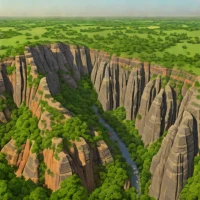


Reviews & Comments
Write a Review
Be the first to review
Share your thoughts with the community and help others make better decisions.


