
description Ellora Stupa (Cave 10 area) Overview
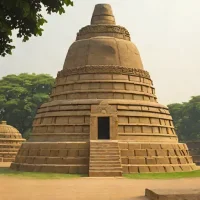
The Ellora Stupa, situated within Cave 10 of the UNESCO World Heritage site, represents a significant example of 7th-century Buddhist architecture. Constructed by the Rashtrakuta dynasty, this rock-cut stupa serves as the core element of a vast chaitya hall. It is notable for its scale and demonstrates advanced stone carving techniques. The structure is of interest to historians, archaeologists, and those studying ancient Indian religious art and architectural development particularly within Maharashtra.
help Ellora Stupa (Cave 10 area) FAQ
Which dynasty constructed the Ellora Stupa in Cave 10?
The magnificent Ellora Stupa located in Cave 10 was primarily constructed by the Rashtrakuta dynasty during the 7th century. This era marked a significant architectural boom in the region, characterized by massive rock-cut excavations. The Rashtrakutas were prolific patrons of both Hindu and Buddhist art, leading to the diverse cave systems seen at Ellora today.
What is the architectural significance of Cave 10 at Ellora?
Cave 10, locally known as the Visvakarma Cave, is celebrated as the most famous Buddhist chaitya hall (prayer hall) at the Ellora complex. It features a massive, ribbed, vaulted ceiling carved entirely out of solid rock to mimic wooden structural elements. The focal point of the hall is the imposing stupa, which features a large, seated Buddha figure carved into its front.
Is the Ellora Cave 10 stupa a UNESCO World Heritage site?
Yes, the Ellora Caves, including Cave 10 and its central stupa, were officially designated as a UNESCO World Heritage site in 1983. The designation recognizes the incredible technical skill required to carve these monolithic structures directly into the basalt cliff face. The site is protected and managed by the Archaeological Survey of India (ASI) to preserve its ancient Buddhist, Hindu, and Jain monuments.
How does the Ellora Stupa differ from earlier stupas at places like Ajanta?
While earlier stupas at sites like Ajanta are primarily solid, dome-like reliquaries, the stupa in Ellora’s Cave 10 incorporates a massive, front-facing sculpture of a seated Buddha. This represents a shift in Buddhist architecture where the focus moved from simply venerating a relic to directly worshipping the Buddha image. The integration of the Buddha figure into the stupa's facade highlights the transition into Mahayana Buddhist traditions.
explore Explore More
Similar to Ellora Stupa (Cave 10 area)
compare_arrows Compare: Karle Stupa (Karla Caves) See all arrow_forward


Reviews & Comments
Write a Review
Be the first to review
Share your thoughts with the community and help others make better decisions.


